
Welcome to Day 1 of the Colors of Change experience! We’re so proud of you for taking this step, and we can’t wait to support you on your journey to long-term health.
One of the first and most meaningful steps toward real wellness is simply paying attention. This idea of checking in with your body without obsession or fear is a foundational practice for life-long health. When you learn to observe and listen to your body, you’re able to notice changes, address issues before they escalate, and give your body the care it needs.
Today, we’re diving into this concept of awareness with one of the most basic (yet powerful) tools in your wellness toolbox: walking. But hang with us here—this isn’t your typical "walking is good for you" advice. Instead, we’re going to change how you think about walking, and more importantly, how you walk. Trust us, this will change everything!
Let’s Check-In on Your Walking Style
Let’s be real—walking can seem basic or even boring. But think about it: how often do we really pay attention to how we walk? Between carrying bags, scrolling through our phones, or just getting from point A to point B, many of us have lost the natural rhythm of walking, especially the simple act of swinging our arms.
Your walking style affects more than just how fast you get somewhere. It impacts your spine health, mobility, and even your nervous system. And yet, many of us walk too rigidly, with stiff torsos and arms that hardly swing. Over time, this can cause unnecessary tension, poor posture, and reduced flexibility, especially in your spine.
Why does this matter? Because walking is one of the easiest ways to take care of your body—but how you walk is just as important as how often you walk.
A Real-Life Example: The Impact of Not Paying Attention
Take Jennifer, for example. After battling costochondritis (inflammation of the cartilage in the chest), she developed a stiff, guarded walking style. The pain from the condition lasted for months, and even after healing, her body remained in "protection mode," bracing with every step. This stiff walking pattern eventually led to long-term spine issues, all because she wasn’t aware of how her body had adapted to the pain.
This is why we’re here—to help you avoid preventable issues and support your wellness journey. It's so worth it to cultivate the ability to pay attention!
Why Arm Swing and Torso Rotation Matter
Did you know that the simple act of swinging your arms while walking has major benefits? Studies show that rhythmic movements like arm swinging engage your vestibular system (which helps with balance) and activate your parasympathetic nervous system, which calms the body and reduces stress.
Not only does arm swinging improve spine health and mobility, but it also enhances mental clarity by increasing blood flow and oxygen to the brain. And when your torso rotates naturally with each step, it helps maintain flexibility and prevent tension from building in your body.
There’s more to this. Walking in itself releases endorphins, which act as natural mood boosters, but when you add proper arm swinging, research shows you’re engaging more of your body and increasing blood flow and oxygen to the brain. This enhanced circulation can lead to improved cognitive function, making you feel more alert, focused, and emotionally balanced.
Research has also shown that when you walk with your arms swinging in coordination with your stride, it can help lower stress levels and elevate your mood, and reduce feelings of overwhelm.
On the worst days, you can just tune in to how you're walking and by making small adjustments, like loosening your shoulders and allowing your arms to swing, you’re helping to support your long-term mobility, overall health, and nervous system. It can change everything about your day.
Why This Matters for Your Long-Term Health
Looking beyond the day-to-day, walking is one of the most accessible and effective ways to take care of your health, but it’s not just about getting steps in. If your walking gait isn’t aligned properly, it can lead to long-term problems—like chronic pain, tension, and even joint degeneration. Over time, poor walking mechanics can affect everything from your balance to your mental well-being, contributing to conditions like osteoporosis, arthritis, and muscle imbalances.
But we’re not saying this to scare you—we’re here to help you take charge of how you move. The more aware you are of your body’s movement, the better you’ll feel. How you walk today can make a huge difference in your mobility, energy levels, and well-being down the road.
What Does This Mean for You?
Now, let’s take a moment to think about how you walk. Small shifts, like swinging your arms and loosening your torso, can make a huge difference over time. It’s not about perfection, but simply paying attention to your body and how it moves.
If that's hard, or if you're in a season where your body isn't its best, listen to this encouraging mindset talk about better ways to observe your body with kindness.
Today’s Care Task: Check Your Walking Style
Here’s your task for today:
As you go about your day—whether you’re walking around the house or taking a stroll outside—pay attention to how you move. Ask yourself:
- Am I rotating my torso naturally?
- Are my arms swinging freely in rhythm with my steps?
- Do I feel tension in my neck, shoulders or torso?
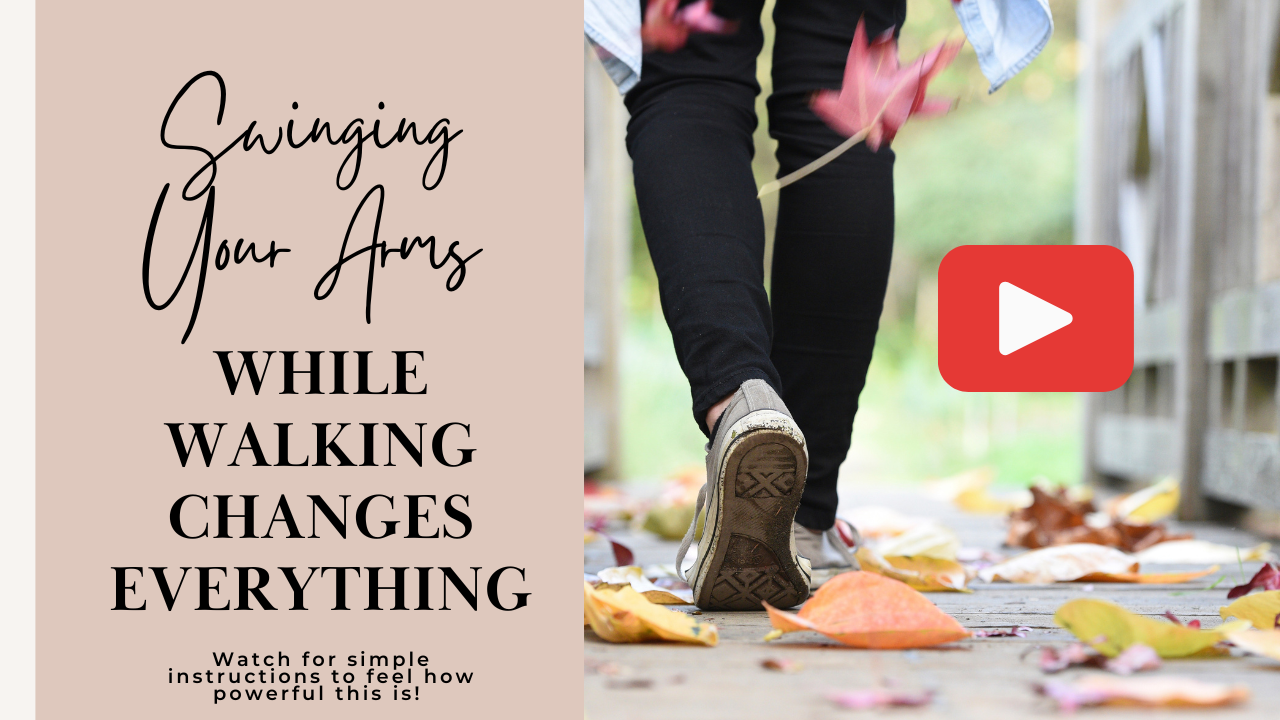
If you notice stiffness, shake it out! Loosen up your shoulders, and let your arms swing. You don’t need to schedule a special walk for this—just notice how you’re moving throughout the day. Watch this video for what you're looking for.
Color Check-In: How’s Your Walking?
To make it fun, use this fall-inspired color scale to check in on your walking:
- Red: You notice your torso is rigid, and your arms don’t swing naturally. Walking feels stiff, and there’s tension in your upper body. If this is your color, this is a very powerful shift for you to bring some ease into your body. When you have a free moment, it would benefit you to do some simple stretches for your shoulders, chest, and thoracic spine.
- Orange: You’re fairly loose. Your arms are moving more freely, but you still catch yourself stiffening at times. You can feel your body relax when you think about it.
- Yellow: You’re walking with ease! Your torso is rotating naturally, and your arms swing in harmony with your steps. You feel relaxed and balanced. CELEBRATE! This is something going well in your body.
Why This Matters for Your Wellness Journey
Today, as you walk, we invite you to replace judgment with curiosity. If you notice your arms aren’t swinging or your torso feels stiff, don’t worry—that’s just information. Now you have the chance to gently open up your body, swing your arms a little more, and feel the flow of movement come back. The more you move with kindness, the more your body will respond and change.
This is your opportunity to embrace your body, exactly as it is, and celebrate every small adjustment you make in your unique body. Swing those arms, loosen those shoulders, and know that every movement, no matter how small, is a step toward feeling better.
Walking isn’t just about getting steps in—it’s about how you move. Walking might seem small, but it’s a perfect example of how minor adjustments can lead to significant results over time. This is just the beginning of your wellness journey, and there’s so much more to come!
Keep up the great work, and we’ll see you tomorrow for the next small step toward real, meaningful health change!
Be well,
Jennifer and Heather
Special Offer:
Schedule a Walking Assessment
If everything feels wrong and upside down or painful and you feel like your walking has changed recently, you can schedule an assessment with Heather to go over ways to improve your body's walking habits!


Responses